

So as you may have heard, there's this pandemic that made this part of the world stop in March, and since I had some time on my hands, why not put idle hands to good work?
For some time now I've been buying materials to do a complete soundproofing and thermal insulation on the MW, and this seemed like the perfect time to do it.
So, I decided to do complete interior, floor, doors, roof and trunk, started with floor, by removing all interior first.


After removing everything, you search for rust spots (not even one) and start cleaning all the steel sheet to get the best adhesion from Alubutyl

The carpet was a bit worned out, some spots had already ripped and I decided to buy a new used one.


Unfortunately, the lockdown stopped everything in Europe, and the package with the carpet and trunk management parts stopped in Netherlands, and after a few months at some warehouse was "lost" by DHL. Fortunately they reimbursed me for the full amount, but still, I would've preferred the carpet. In June I had to go back to work, so had to install back the old carpet.
So, Soundproofing. Right.
I've research this for a long time, and basically there's three kinds of noise you ca eliminate with current materials, resonante noise (from vibrating sheet metal of your car), transmitting noise (from the road and tires, motor, wind noise) and reverberation noise (from your own sound speakers echoing inside the cabine). (These are not official designations, but I think they communicate better the principles).
There are some more details to soundproofing, but these are the bigger sources of noise I decided to tackle, and for each there are different materials with different soundproofing characteristics.
First, for resonante noise we use Alubutyl, AKA alu-mastic (car brands usually use a material called bitumen, which is heavier but harder to install for the home user, it has to be heated, and quickly pressed, making alubutyl a easier alternative), this one is maybe the most commom soundproofing material that everybody gets, and probably the most efficient for the least cost of work and materials, for the biggest result. What I gather form all this is that mass (weight) is the best way to eliminate noise, and this one works by adding mass to a metal panel, that way requiring more energy to move it and make noise, but since the energy in the system will be (negligibly) the same, then the noise created by the metal will be smaller. Because cars have many big metal panels (roof, hood, doors, etc) they are more prone to be affected by vibrations from the road, engine, and speakers, so eliminating this source will be your major reduction in noise, and your best bet to start with. One thing of note, we are talking about relative small perceptual values in noise reduction we can achieve, so we got to have that in mind, but the sum of all parts will get you great results.

I started by making paper patterns of different panels of the floor, and while this requires more time to do, I was able to cut alubutyl sheets to size, and prevent overlap of material, and reduce material waste. I wanted to do multiple layers of material, so it was important to reduce the thickness of each to it's minimum.
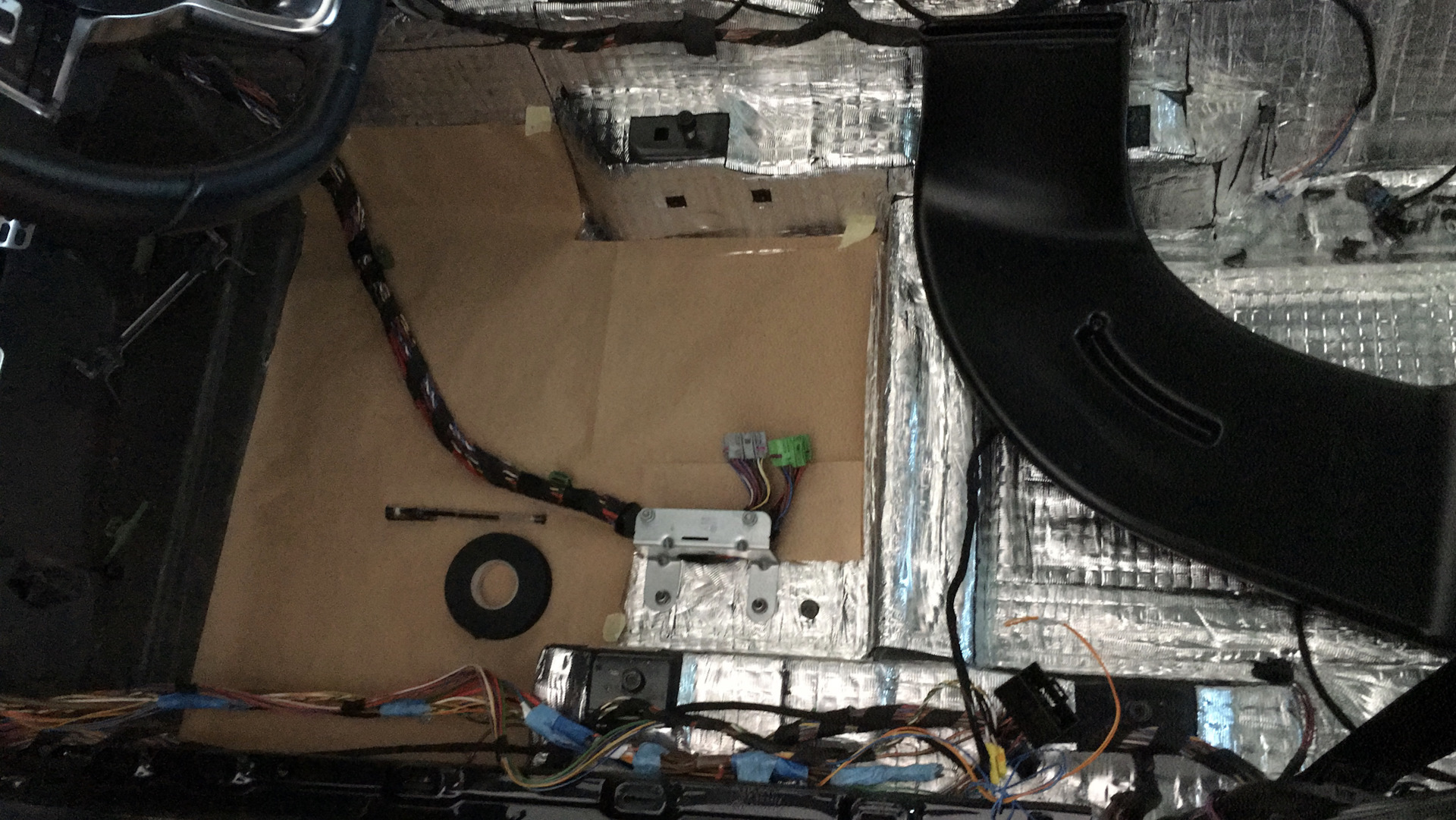
With the patterns done I'd transfer to alubutyl, cut with a scissor or a knife, fitted back to the car, and then glued and rolled everything down with metal rollers for the big areas, and a plastic card for those hard to reach places and panel creases. In the end, for the floor and rear seat shelf I used 2 and a half rolls of 2m², and very little waste.

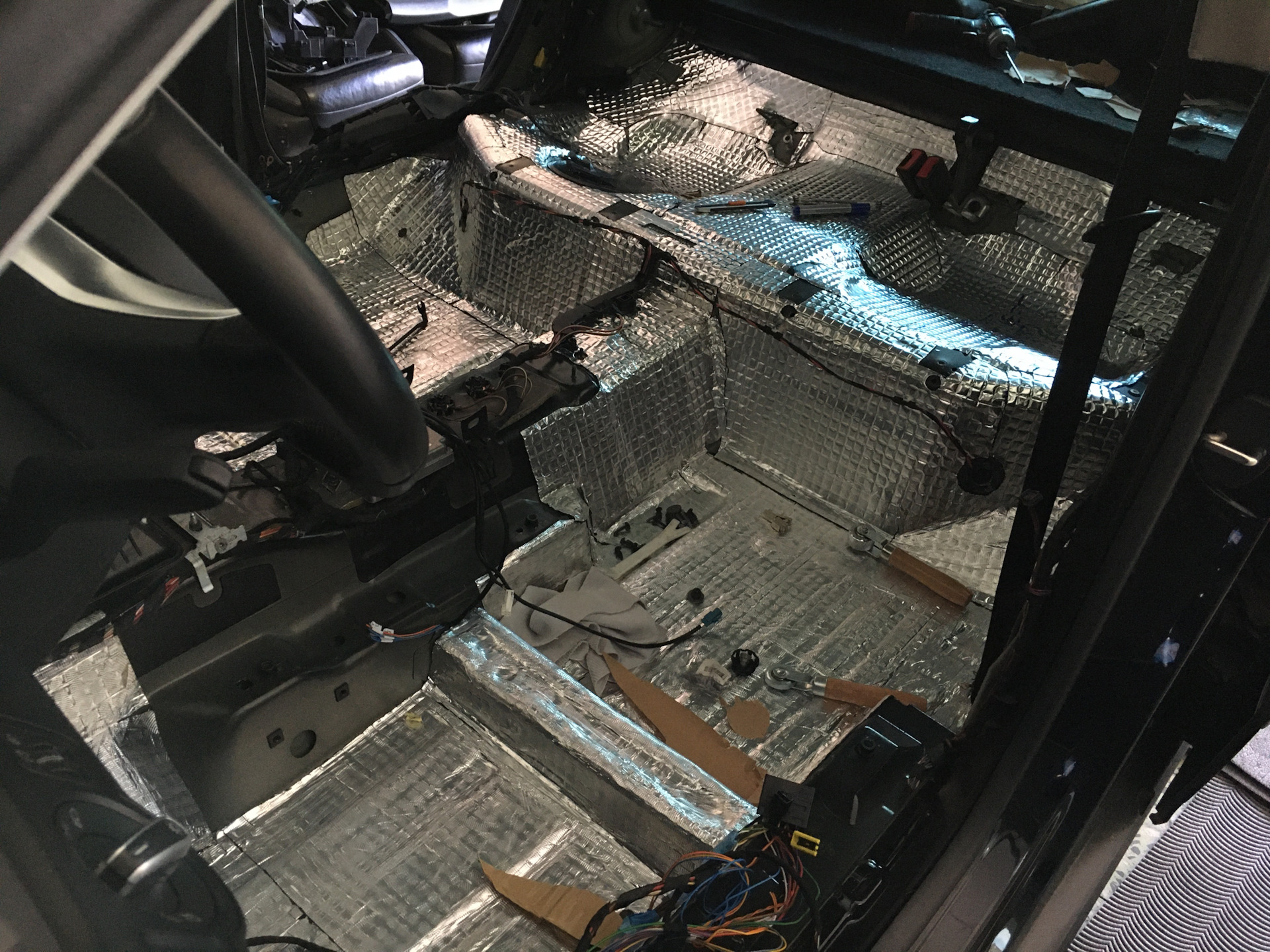

In the floor I ended up taping all the gaps with aluminium tape, which added up a few days more to the job, but I figured in the floor, where it's more prone to get water ingress, as a precaution it's better to tape the gaps in order to prevent the water getting under the alubutyl, where it can start corroding the metal without being obvious. Also the mastic material tends to squeeze through the gaps and stick to everything it touches, so this also protects the carpet from becoming a black sticky mess underneath. I didn't do this for the other panels (except doors).

With this done, I added one second layer of rubber foam, this is an thermal insulation material, more than a soundproofing material, despite it being sold as such, it does very little to reduce any kind of noise. going back to that mass principle, anything that is light, is very poor in reducing any kind of noise. Actually the only noise reduction this material does is by decoupling, by wrapping it around any loose equipment you might have (wiring, for exemple) that makes contact with other surfaces from the car vibrations. It's useful for that because it's cheap and soft, so it's easier to wrap around stuff. There are other alternatives for this that I prefer (foam tape, fabric tape, etc), so I chose to use foam rubber just for thermal insulation.
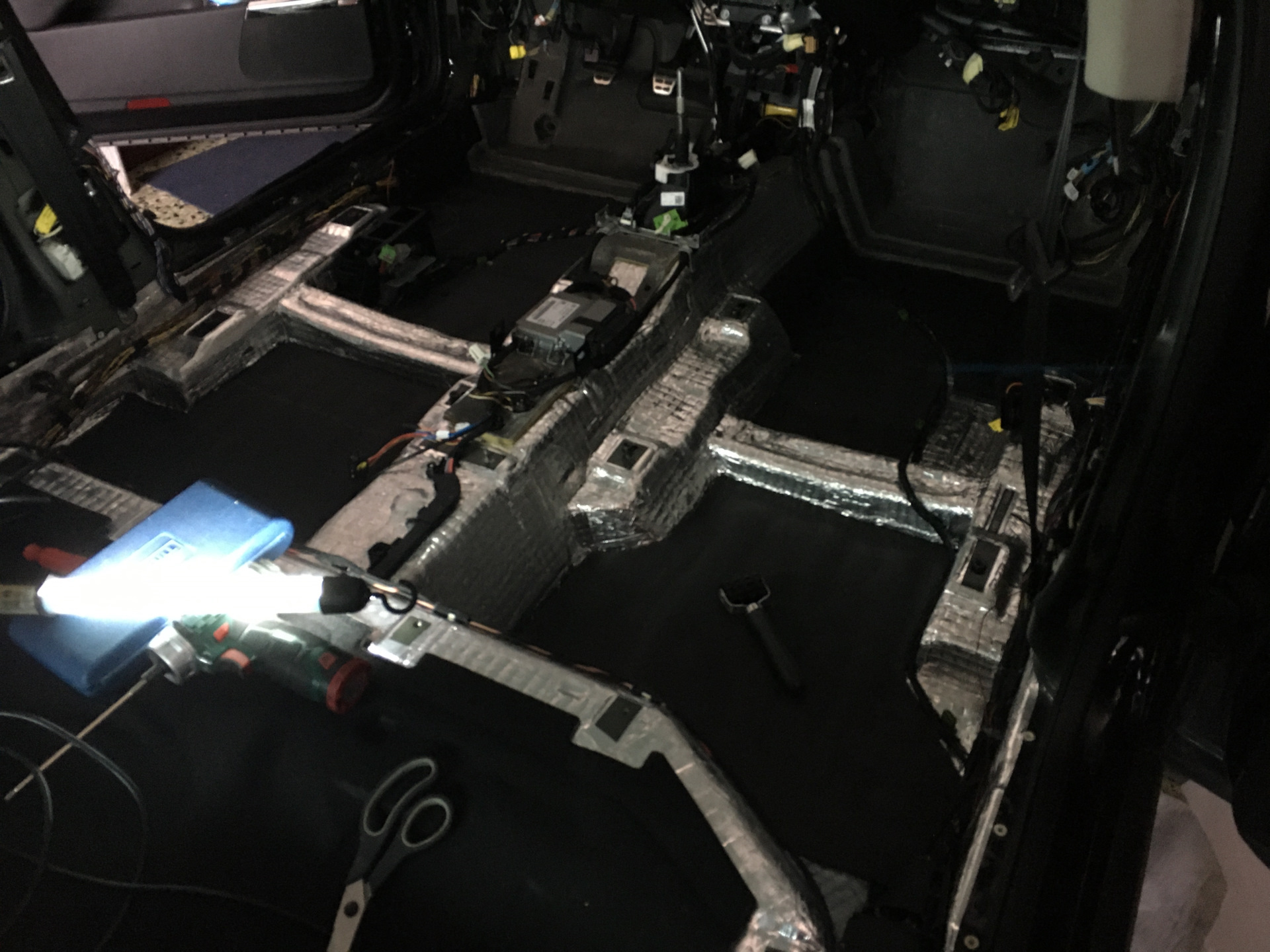
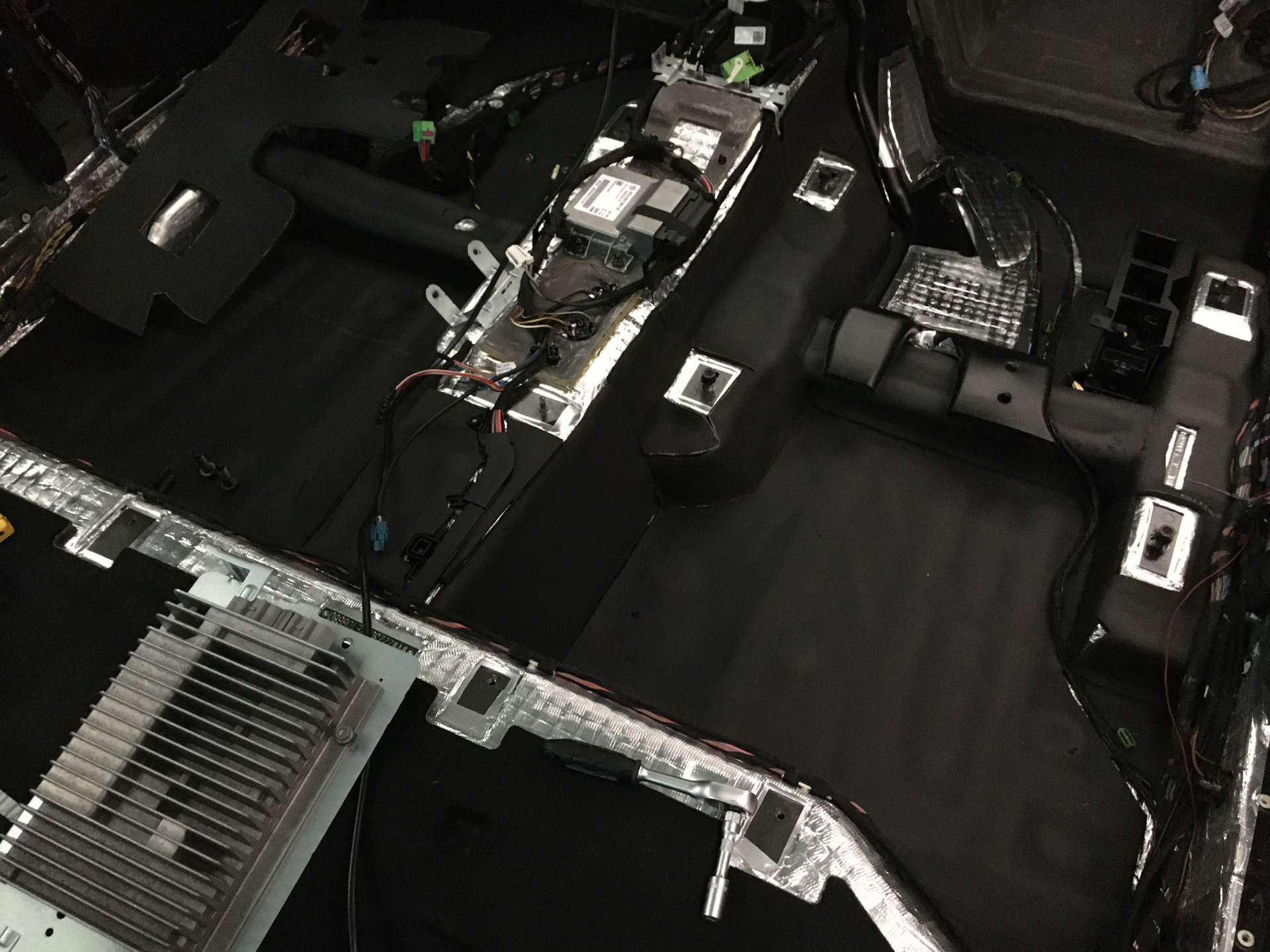

The thing with thermal insulation, much like sound, you have to fill all the gaps if you want it to be effective, any gap that's open will work like a sieve and let the heat/cold in (same thing with sound), so you have to cover as much as possible. You can also tape the gaps with foam tape, which I didn't do just because it didn't arrive in time because of the lockdown, but there's 3mm tape available just for this. Might do it when I change the carpet in the summer.
Since this was the thicker material I will be using, there was a danger of the carpet not fitting right anymore, so I got 10mm and 6mm foam rubber, thicker one was used on the floor, and 6m used on the walls and other places where the carpet had less space between it and the metal. In the end the carpet fit alright, it's noticeable the added height of the floor, but nothing that you notice day to day.

The last step I did for the floor is control noise transmission (as much as possible, still wasn't able to do full coverage on this step), and you do this with a mass barrier, with weighted materials. Such material is MLV, or Mass Loaded Vinyl, it's a vinyl material that's available in many thickness, and is used in construction and automotive and train industry to eliminate road, engine, and track noises. I'll talk about this in a later log, for now let's just say that this does what we usually think soundproofing is, reduce noise intensity.

I did four panels at the front and rear seats feet, with 4mm thickness that's about 8kg/sqm and is about as thick as you would want to go for this application, and only on horizontal surfaces, anything else other than horizontal and you'll have to fix the mlv with some kind of physical means, not many glues will be able to secure this in place for long on a vertical face.

And that is it for the floor, I will keep adding more logs for the rest of the car, and explain a bit more of the theory behind my choices and I hope it helps someone out understanding this better.
More to come.


Комментарии 13
Серьёзный подход. И замечательный результат 👍
Perfectly…
Excellent work!
Thank you
Ну бляяяяяяяяяяяяяя!
XD thank you, I do like to hear myself talk.
я когда сделал пол, потолок, двери и все возможные щели. то первое время казалось что уши заложило и приходилось приоткрывать окно.
Хорошая работа, поздравляю
yes, there's this sensation of absence of sound that's a bit disorienting when you enter the car first few times. It's a bit like entering an anechoic chamber.
Thank you, appreciate it.
Вот как должна выглядеть шумоизоляция класса премиум! Очень кропотливая работа проделана, приятно посмотреть. Могу только представить как приятно ездить теперь на таком автомобиле — одно удовольствие, хоть и не видно как качественно всё уложено, но в душе то Ты знаешь… Перфекционизм во плоти — круто!
Exactly, someone understands me :D Thank you.
I heard good feedbacks about Tornador Cleaning. It requires air line. It might help you restore the original carpet.
www.amazon.com/Tordandor-…ul-Cleaning/dp/B06XJ1GFP9
I've heard about it before, it's some kind of strange voodoo :D Here at home we use a Karcher to clean fabric and carpets, works quite well too.
well done!
Thank you